Pennsylvania Sleep Guide
What to Consider When Exploring Casper Mattress Options
A mattress decision begins less with a logo than with the person who will lie down on it: how they sleep, what they find comfortable, and what their bed frame can reasonably support. Here is a practical way to assess Casper options without letting brand names, specifications, or showroom shorthand make the choice for you.
Shopping for a mattress is a peculiar exercise in imagining the future. You are asked to predict how a surface will feel at two in the morning, after a long day, through a season of warm nights and cold ones, and perhaps with another person shifting beside you. Then you are offered a vocabulary—firmness, contouring, responsiveness, support—whose meanings are both useful and surprisingly personal.
Casper is one of the names shoppers may encounter while comparing mattresses, but a familiar name is only a starting point. Product ranges change, specifications differ, and an option that suits one sleeper may not suit the next. The sensible task is to compare the current models on their stated features, then measure those features against your own habits and bedroom setup. In Pennsylvania, where a bedroom might be a compact city apartment, a drafty farmhouse room, or a newer suburban space, practical questions of dimensions, temperature, delivery access, and bed-frame compatibility belong in the conversation too.
This guide is not a verdict on a particular mattress or a substitute for current product information. It is a framework for making a more deliberate comparison: one that starts with comfort and support, checks the foundation beneath the mattress, and ends with the details that are easy to overlook when a product page is full of confident adjectives.
Begin with the way you sleep
Before considering a brand or model, take stock of how you actually use your bed. Sleep position is a useful first clue. Side sleepers often pay close attention to cushioning around the shoulders and hips, since those areas press more directly into the mattress. Back sleepers may look for a surface that feels supportive without seeming unyielding. Stomach sleepers sometimes prefer a firmer feel, though individual comfort and body shape matter. Many people move among positions during the night, making a middle ground—or a responsive surface that allows easy movement—worth exploring.
These are tendencies, not rules. A label such as “medium” does not guarantee that a mattress will feel medium to every person. Body weight, proportions, sensitivity to pressure, and even the bedding used can affect perception. Treat firmness descriptions as a rough map rather than a promise. If possible, try a mattress in person, and spend more than a moment on it: lie in your usual position, change positions, and notice whether you feel supported or simply held in place.
It helps to be specific about what you dislike. “I want a comfortable mattress” is true but difficult to act on. “My shoulder aches when I sleep on my side,” “I feel as though I am rolling toward the middle,” or “I wake up when my partner turns over” gives you a more useful set of questions. Comfort is not a single sensation. It includes pressure relief, ease of movement, stability, and the feeling that your body can settle without constant adjustment.
Separate comfort from support
In ordinary conversation, comfort and support tend to be used as if they were synonyms. In a mattress comparison, it is helpful to distinguish them. Comfort describes the immediate feel: cushioning, surface softness, and how the mattress responds when you lie down. Support is more about whether the sleeping surface helps keep your body in a position that feels natural and stable.
A mattress can feel plush at first and still be a poor match if you wake with discomfort or find that your hips sink in a way that feels awkward. Conversely, a firm mattress can feel impressively substantial in a store and yet produce pressure at the shoulders or hips over a longer stretch. Neither softness nor firmness, by itself, tells you whether a mattress is right for you.
When assessing Casper mattress options, review the current descriptions and construction details, but do not let terminology settle the question prematurely. If a product is described as having a particular feel or support profile, consider what that could mean for your sleep position and preferences. Where available, compare the same details across models: the stated firmness, materials, thickness, intended sleep experience, and any conditions attached to a trial or return. Those policies can matter because brief testing is an imperfect forecast of nightly use.
If you have persistent pain, a diagnosed condition, or medical concerns affecting sleep, a mattress purchase is not a clinical treatment. A healthcare professional can help you think through those concerns; product descriptions cannot diagnose or resolve them. The practical goal here is to find a surface that works with your needs, not to expect furniture to perform a medical miracle.
If you share the bed, make it a shared decision
Two people can occupy the same mattress and experience two entirely different beds. One may want a softer surface; the other may prefer firmer support. One may sleep lightly and notice every movement, while the other can turn over with the unselfconscious energy of someone rearranging a room. This is why the question of whether you share the bed matters from the beginning, not as an afterthought.
When comparing options, talk about what each sleeper values most. Is it pressure relief, a firmer feel, room to move, or less disturbance from a partner? Ask whether your current mattress problem affects both people or only one. A shared trial, if available under the retailer’s current terms, can provide a more useful assessment than either partner testing alone.
Pay attention to the bed’s width as well as the mattress. A mattress that is too narrow can make a good material feel like a bad arrangement. Check standard dimensions against the room, existing frame, and the amount of space each person needs. Make sure there is room to walk around the bed, open drawers, and reach doors. In older Pennsylvania homes, staircases, narrow hallways, and tight turns may also complicate delivery; measure the route, not just the bedroom.
If your preferences are sharply different, look into whether the current options provide configurations or alternatives designed to accommodate different needs. Verify details directly with the seller rather than assuming that a product line includes a particular feature. A name or general brand description is not a specification.
The frame beneath the mattress matters
A mattress is not an independent island. It rests on a foundation, and the foundation can affect how the whole arrangement feels and functions. Before you settle on a Casper option, identify what you already own: a platform bed, slatted frame, adjustable base, box spring, or another kind of support. Then check the mattress maker’s current requirements for compatible foundations, support spacing, and any restrictions.
Do not assume that all frames are interchangeable or that a platform design always makes a separate foundation unnecessary. The answer depends on the specific mattress and its manufacturer’s instructions. If the specifications call for closely spaced slats, measure the distance between them. If they specify a particular type of base, confirm that your frame meets the requirement. A foundation that is too flexible, uneven, or otherwise incompatible can undermine performance and may have consequences for warranty coverage.
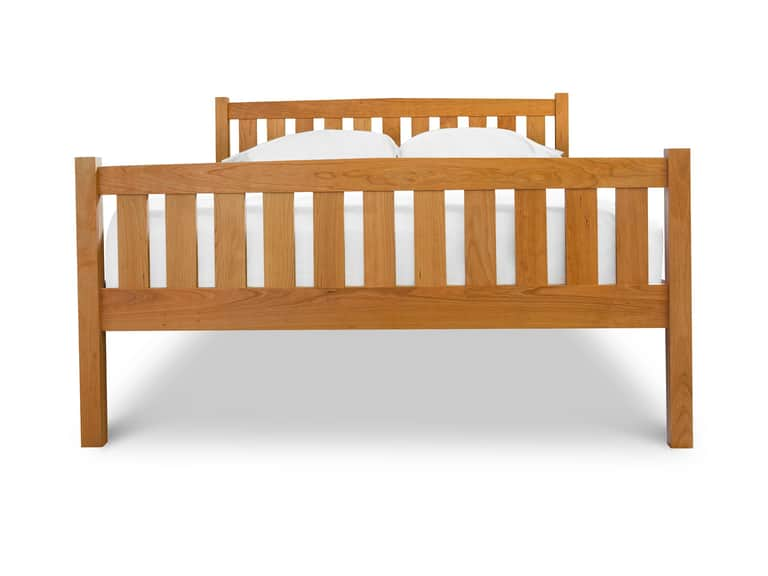
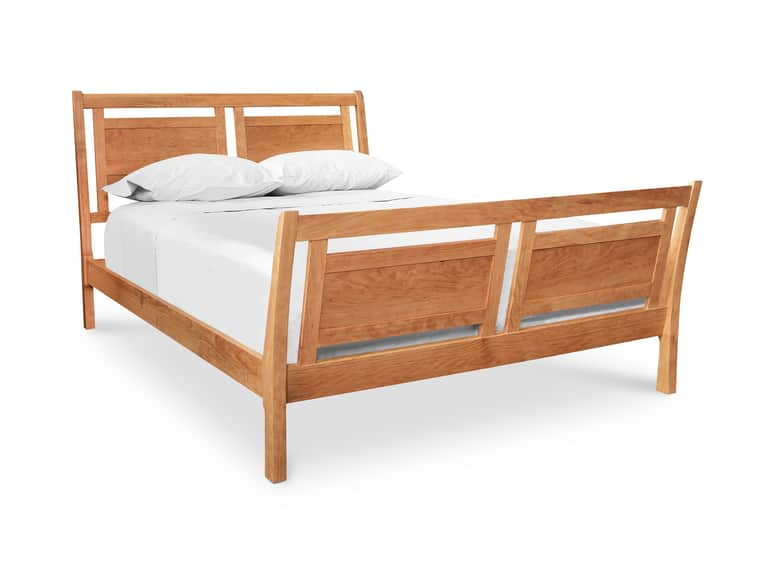
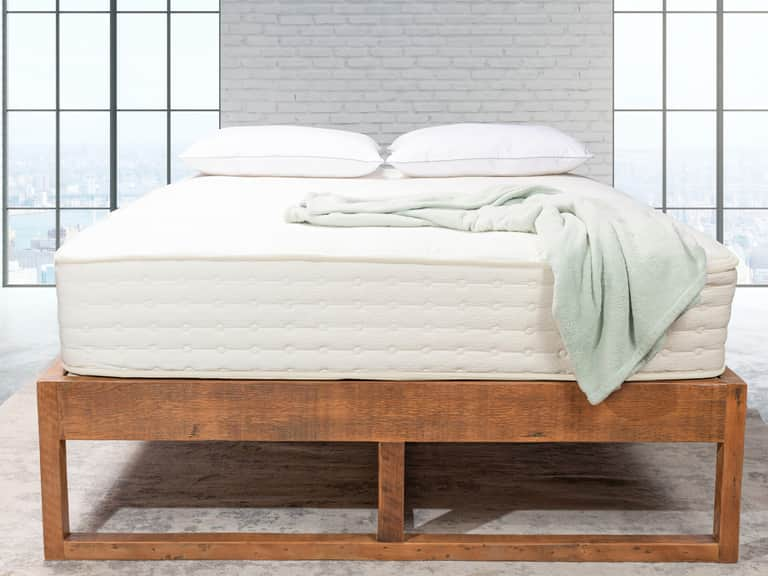
Platform frames illustrate how design details become practical details. The height of the frame affects how easy it is to get in and out of bed, as well as how the mattress sits visually in the room. Slat spacing, center support, and weight capacity are structural matters, not mere fine print. Clearance beneath the bed can determine whether storage bins fit, whether cleaning is convenient, and how much air can circulate below the frame.
A wooden platform bed may appeal for its simple silhouette and sturdy construction, but its usefulness still depends on compatibility with the mattress in question. Measure the interior dimensions of the frame; nominal mattress sizes do not always tell you whether a particular model will fit comfortably within a specific piece of furniture. Check for a headboard, footboard, or lip that could change the usable space. If you are replacing only the mattress, bring the frame’s make and measurements into your research.
Read the current specifications, not yesterday’s description
Mattress collections can be revised, renamed, or reorganized. That makes current documentation more valuable than a review or comparison written for a model that may have changed. When you explore Casper mattress options, confirm the exact product name and model, its dimensions, materials, construction, and support requirements on an up-to-date product page or with the seller. If a detail matters to your decision, do not rely on a summary that leaves it vague.
Product language can also be more evocative than precise. Words such as “cooling,” “responsive,” or “pressure-relieving” invite the imagination to fill in the blanks. Look for the explanation behind them. What materials or design features are being described? Is the statement a general characteristic, a comparative claim, or a promise tied to a specific condition? The more concrete the specification, the easier it is to compare fairly.
Keep a short record as you browse. Note the model name, quoted dimensions, stated firmness, frame requirements, trial terms, return costs if any, and delivery arrangements. A few lines in a phone note can prevent the frustrating discovery that two apparently similar listings refer to different products. It also gives you a way to compare options without relying on a dozen browser tabs and a memory that is already occupied by paint samples and work emails.
Think about heat, materials, and maintenance
Temperature is a familiar source of nighttime dissatisfaction. If you tend to sleep warm, ask what the current product information says about materials and temperature-related design, and consider the entire sleep setup. Sheets, a mattress protector, blankets, room ventilation, and seasonal humidity all play a part. No single feature can guarantee that every sleeper will feel cool through every night.
Materials matter for other reasons as well. Some shoppers are attentive to odor after unpacking, the feel of different foams, or the environmental claims associated with a product. Read those claims carefully and look for explanations of what they cover. “Natural,” “clean,” or “eco-conscious” can be broad terms; they do not automatically tell you the composition of every layer, the origin of every material, or how a product should be cared for.
Maintenance is less glamorous than choosing a mattress, but it affects the everyday experience. Check the manufacturer’s instructions on rotating, cleaning, using a protector, and handling spills. Do not assume a mattress should be flipped; designs vary, and the manufacturer’s guidance takes precedence. A properly fitted protector can help defend against ordinary accidents, but it too should be compatible with your comfort preferences and care routine.
In Pennsylvania, seasonal changes make it sensible to consider the bedroom itself. A room that is comfortably cool in October may feel different during a humid summer spell or a dry winter heating season. Think about ventilation and bedding along with mattress materials. A mattress choice is part of a sleep environment, not a substitute for one.
Budget for the whole setup
The price on a mattress listing is only one part of the cost of changing a bed. You may also need a compatible foundation, a frame, a mattress protector, new sheets, or delivery and removal services. Before comparing prices, decide what you are actually buying. If the existing frame is in good condition and compatible, that is useful; if it is unstable or the wrong size, a mattress purchase alone may not solve the problem.
Review the terms attached to any trial period, return, exchange, or warranty. Confirm the time limits, required steps, and any costs rather than assuming that a broad headline tells the whole story. Policies can change, and the terms applying to a particular purchase may differ from those described in an older article. Keep a copy of the information provided at the time of purchase.
It is equally wise to distinguish a discount from a good fit. A sale can make a suitable mattress more accessible, but a lower price does not compensate for an incompatible frame or a feel you dislike. Set a realistic budget for the complete arrangement, then compare options within it. If you are replacing a mattress because of a specific problem, write down what the new setup must improve. That list is a better guide than urgency or a countdown banner.
A practical comparison checklist
Before making a decision, gather the details that are most likely to affect your day-to-day experience. The exercise need not be elaborate. A careful half hour with a tape measure and a current product page can be more valuable than an afternoon spent collecting generalized opinions.
- Sleep habits: Record your usual position, how often you change positions, and what you would most like to improve.
- Comfort preference: Describe the surface you enjoy in practical terms, such as cushioned, buoyant, firm, or easy to move across.
- Bed sharing: Include your partner’s preferences and concerns about movement, space, or differing comfort needs.
- Current frame: Identify its type, interior measurements, slat spacing, center support, and weight capacity.
- Room and route: Measure the bedroom and the path from the entrance to the bed, including stairs and turns where relevant.
- Product specifics: Verify the exact model, dimensions, materials, and support requirements from current information.
- Ownership terms: Read the current trial, delivery, return, and warranty conditions before paying.
- Care: Check cleaning and maintenance instructions, and consider whether the mattress protector and bedding suit your routine.
Make the choice in the right order
There is a temptation to begin with the most visible part of the purchase: a brand name, a sale price, or a pleasing photograph of a carefully made bed. A more reliable sequence begins with the sleeper. Establish what feels comfortable and what kind of support seems appropriate; consider whether another person shares the mattress; check the frame and room; then compare current models and terms.
That order makes the research less mysterious. Instead of asking which Casper mattress is best in the abstract, ask which current option appears to meet your particular requirements—and what evidence supports that conclusion. If an important specification is missing, seek clarification. If the frame requirement is unclear, verify it before ordering. If you cannot try the mattress in person, understand the applicable trial and return conditions before treating a purchase as reversible.
A bed is a large object that becomes nearly invisible once it is working well. The mattress is beneath the sheets; the frame is half-hidden by the room; the daily benefit is measured in small, unremarkable things: settling comfortably, waking without a fight with the bedding, and having a setup that fits the room as well as the sleeper. Those are humble criteria, but they are the ones worth bringing to a comparison.
Exploring Casper mattress options, then, is not a matter of finding the most impressive description. It is a matter of asking better questions and checking the answers against your own life. Sleep position, firmness preference, shared-bed needs, support requirements, room dimensions, and frame compatibility form a practical compass. Follow it, and a brand comparison becomes less like a wager and more like a considered decision.