Furniture · Bedroom Design
Shaker Simplicity: The Design Language of Vermont Furniture Designs
A bed need not announce itself to define a room. In the American Shaker Panel design, clean lines, quiet proportions, and considered construction make a case for furniture that belongs to everyday life—and can outlast the moment in which it was bought.
Published November 5, 2026
The bedroom is a room in which objects acquire unusual intimacy. A chair becomes the place where yesterday’s clothes wait. A bedside table receives a glass of water, a book abandoned mid-sentence, a phone turned face down. And the bed, naturally, is both the largest piece of furniture and the one asked to do its work in near darkness. It must support, occupy space, and somehow avoid making the whole room feel like an announcement.
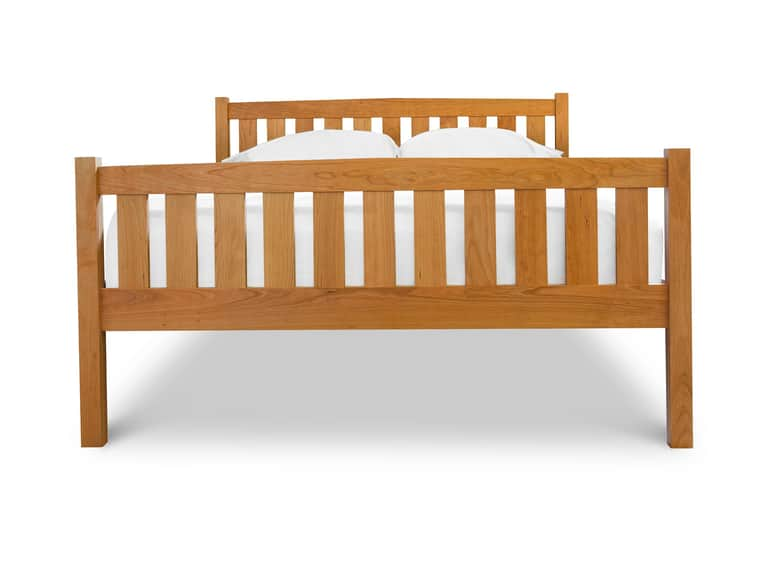
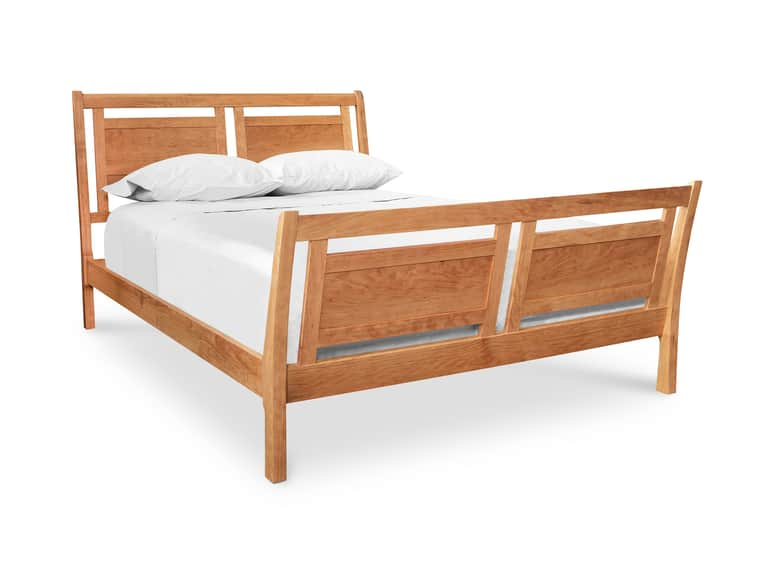
This is where Shaker-inspired design has a particular appeal. The American Shaker Panel Bed takes a direct, composed approach to the bedroom: solid wood, clean headboard and footboard panels, and a restrained silhouette. Its character lies less in ornament than in proportion and material. The result is not a blank object, exactly, but one that leaves room for the life around it.
That restraint is sometimes mistaken for simplicity in the sense of ease. Yet a spare design has nowhere to hide. When decoration is limited, the lines must make sense; the joinery, finish, and proportions become the substance of the work. A panel bed can look quiet because its decisions have been made carefully, not because there were no decisions to make.
What “Shaker-inspired” means in a bedroom
The Shakers were a religious community whose history and material culture are closely associated with disciplined living and practical objects. Their furniture is now widely recognized for clarity of form and purposeful construction. But “Shaker-inspired” is best used as a description of a design language, not a claim that a contemporary bed is a historical artifact or a direct reproduction. In modern interiors, the phrase usually points toward an interest in simplicity, utility, and workmanship.
The American Shaker Panel design expresses that interest through its panels and its measured outline. A panel gives a broad expanse of wood a clear structure. The headboard can feel present without becoming elaborate; the footboard completes the bed’s form without needing carved scrolls or applied ornament. The eye finds an order to follow, then is free to move on.
That freedom is useful in a bedroom. A room can hold a bed, lamps, curtains, books, and the assorted evidence of ordinary life without requiring every object to compete for attention. A panel bed gives the space a center, but it does not insist that the rest of the room adopt a particular period or mood. It can sit comfortably beside a woven rug, a modern reading lamp, or an heirloom chest, provided the scale and finishes are considered.
The quiet work of proportion
With a bed, proportion is not an abstract matter. It determines whether the frame feels substantial or heavy, whether the headboard has enough presence for the room, and whether the footboard interrupts a sightline. Before considering a particular style, measure the room and the route into it. A bed that fits on paper can still make a narrow passage awkward, or leave too little clearance for a drawer to open.
The height of the headboard changes the room’s emphasis. A taller panel can create a strong visual anchor, particularly against a simple wall. A lower profile tends to preserve a more open feeling and may suit rooms with low ceilings or limited floor area. The footboard matters, too. A prominent footboard frames the mattress and gives the bed a more enclosed character; a lower one can make the room feel less interrupted. The Shaker panel approach is especially effective when these elements feel balanced rather than oversized.
Think about what the bed will look like from the doorway, not only from the pillow. Bedrooms are seen from several angles: at the end of a hallway, across a shared space, or in the reflection of a mirror. A disciplined silhouette rewards that wider view. Its outlines remain legible, while the wood gives the surface enough variation to avoid looking anonymous.
Wood is not a neutral backdrop
In solid wood furniture, material is part of the design rather than a finish applied after the design is complete. Grain, color, and the way the surface catches light all affect the character of a bed. A warm wood tone can make a pale room feel more grounded; a lighter finish can keep a compact room feeling airy. Natural variation means that the finished piece has its own visual particulars, even when the form is deliberately restrained.
The product description for the American Shaker Panel Bed identifies it as a Vermont-made bed built from sustainably harvested woods, with clean headboard and footboard panels. Those details provide a useful starting point for evaluating the piece: the place of production, the stated sourcing approach, the material, and the form are all relevant. As with any furniture purchase, readers should confirm available wood species, finishes, dimensions, support requirements, and delivery details with the retailer before ordering. A general description is not a substitute for specifications that apply to a particular configuration.
When choosing wood furniture, it helps to look beyond a name for the species or a photograph of a sample. Ask how the finish is maintained, whether the tone varies naturally from piece to piece, and what cleaning products are appropriate. Direct sunlight can gradually alter many wood surfaces; standing water and harsh cleaners can damage finishes. A little care is less glamorous than buying furniture, but it is often what allows furniture to age gracefully rather than simply age.
Construction: the part that stays out of sight
A bed’s visible form is only half the matter. Its frame has to support a mattress and sleepers reliably, and it must keep doing so through repeated movement, seasonal changes in indoor humidity, and the minor disturbances of daily use. Good construction is not always obvious at first glance. It is worth asking how the bed is assembled, what support system it uses, what its weight capacity is, and whether the mattress can be used directly on the frame or requires a separate foundation.
Panel detailing should not be confused with the structure that supports the mattress. The headboard and footboard shape the bed’s appearance; rails, slats, center supports, and other components determine how the mattress is held. Requirements vary by frame and mattress. Before purchase, compare the frame’s instructions with the mattress manufacturer’s recommendations, including any guidance on slat spacing or foundation use. Compatibility is a practical question, not a minor footnote: a handsome frame cannot compensate for an unsuitable support arrangement.
Assembly is another part of the experience. Consider whether the bed can be maneuvered through stairwells and doorways, whether the room allows enough working space, and whether assembly is manageable for the people who will be doing it. If the product is made to order or has a longer lead time, plan around that timing rather than assuming a new bed can appear on the day the old one is removed. These are mundane considerations. They are also the ones most likely to matter at the moment of delivery.
A calm room is made, not bought
It is tempting to treat a bed as a shortcut to a finished bedroom. The furniture arrives; the room is supposed to become serene. But calm is usually the result of several decisions working together. A restrained bed can help, particularly if its lines are clear and its material introduces warmth. It cannot, by itself, resolve clutter, awkward lighting, or an overfilled floor plan.
Begin with circulation. Leave enough room to approach the bed and move around it, taking account of doors, closets, and drawers. Then consider how the bed relates to the other large pieces. A pair of tall, ornate nightstands may give a simple panel bed an unexpectedly formal setting; a modest table and a reading light can reinforce its quietness. Neither arrangement is inherently wrong. The question is whether the combination feels intentional and serves the way the room is used.
Textiles can soften the geometry without disguising it. A relaxed duvet, a textured blanket, or curtains with a gentle drape can provide contrast to the bed’s straight edges. Too much matching, on the other hand, can make the room feel like a set assembled from a single catalogue page. A Shaker-inspired frame offers a useful counterweight: because it is not heavily decorated, it can accommodate personal objects and varied materials without losing its own identity.
How it differs from more emphatic styles
A sleigh bed makes its presence known through a curved profile. A high-footboard panel bed creates a more enclosed outline. Upholstered frames invite touch and can add softness or color. The Shaker panel bed makes a different argument: that a room can feel complete without a strongly theatrical shape. Its visual interest comes from the meeting of planes, the character of the wood, and the balance between headboard and footboard.
This distinction matters when a bedroom already contains a great deal of visual information. Patterned wallpaper, prominent artwork, architectural trim, or several cherished pieces may leave little need for another focal point. A restrained bed can settle into such a room without vanishing from it. Conversely, in a nearly empty room, the bed’s material and outline can provide structure without requiring ornament to do all the work.
There is no rule that a simple form must be paired with a simple interior. Contrast can be more interesting than strict consistency. What matters is scale: a substantial bed in a small room may overwhelm it, while a delicate frame can look undersized beneath a high ceiling. Samples, room measurements, and a careful comparison of dimensions are more reliable guides than the small photograph on a screen.
A considered way to choose
When assessing a Shaker-inspired bed—or any piece of bedroom furniture—separate what you like aesthetically from what you need functionally. Both matter, but they answer different questions. A short checklist can keep the practical details from disappearing beneath the appeal of a particular finish or silhouette:
- Measure the room and access points. Record the available floor area, ceiling height, doorway width, and any stairs or turns on the delivery route.
- Check the full dimensions. Frame dimensions can exceed mattress dimensions; allow for rails, posts, and any projecting headboard or footboard.
- Confirm mattress support. Ask about slats, center supports, foundation requirements, and compatibility with the specific mattress.
- Understand the materials. Confirm the wood options, finish, sourcing information, and expected variation in grain and color.
- Ask about care and repair. Find out how to clean the finish and whether replacement hardware or repair guidance is available.
- Plan for delivery and assembly. Check lead times, what assembly involves, and whether the bed can be carried into the intended room.
This process is not a bureaucratic obstacle course. It is a way to make sure the appealing object is also the right object. Furniture is encountered repeatedly, often in unremarkable moments. A frame that allows the mattress to sit correctly, leaves space to move, and suits the room’s proportions will usually prove more satisfying than one selected for a single striking detail.
The lasting appeal of restraint
Fashion tends to arrive with adjectives: bold, sculptural, dramatic, new. Restraint is less eager to advertise its intentions. The American Shaker Panel design offers a disciplined outline and puts its emphasis on wood, proportion, and construction. It does not ask a bedroom to become a monument to a style. It gives the room a dependable center and lets other elements change around it.
That adaptability is part of the attraction. A bedroom evolves. Bedding changes, lamps are replaced, a new rug appears, and the objects kept nearby shift with the seasons of a life. A bed with a clear, unforced design can remain in conversation with those changes rather than requiring the room to stay frozen around it. The promise is not that a particular piece will suit every home or endure forever without care. It is that good proportions and honest materials are less likely to become tiresome than ornament chosen only for novelty.
For anyone drawn to Vermont furniture designs or solid wood furniture, the Shaker panel idiom offers a useful standard of judgment. Look closely at the panels, but also look at the whole: the way the frame sits in the room, the relationship between its parts, and the practical details beneath the surface. When these elements are in balance, simplicity stops feeling like the absence of design. It becomes the design itself—quiet enough to live with, distinctive enough to notice, and useful in the most ordinary hours of the day.